

"At present some people who learn KUNG FU really stir up astonishment. They roam around in search of Force and methods to acquire it. But what they show is often done improperly, their movements are incorrect. They do not understand that Force from the very beginning is inside their body and they are not good at using the Force. One should take for granted that the Force from the very beginning is inside a human body and act accordingly with this statement. One must learn to use it.
The Art of DA HONG QUAN was stated in three books which are used to teach disciples until now. The books allow to make progress in KUNG FU fast and effectively without saying a word. This fall I visited the house of our family in Hangzhou. Once more I made sure of initial purity of the Art we exercise. The sincere virtue and the inmost knowledge which our ancestors introduced into movements are passed over through centuries and generations. I tried to narrate to disciples about DA HONG QUAN, its fundamentals and the main contents of the Art..."

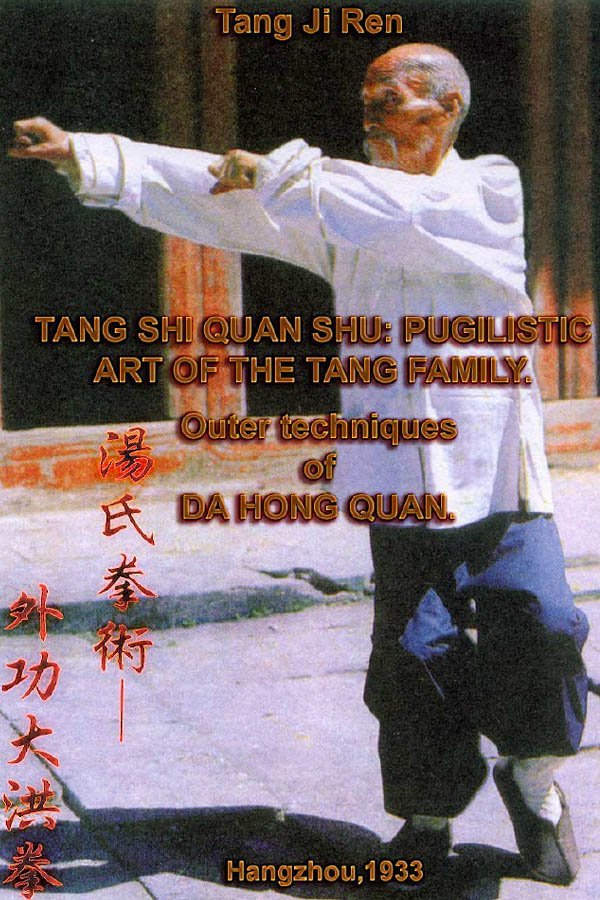


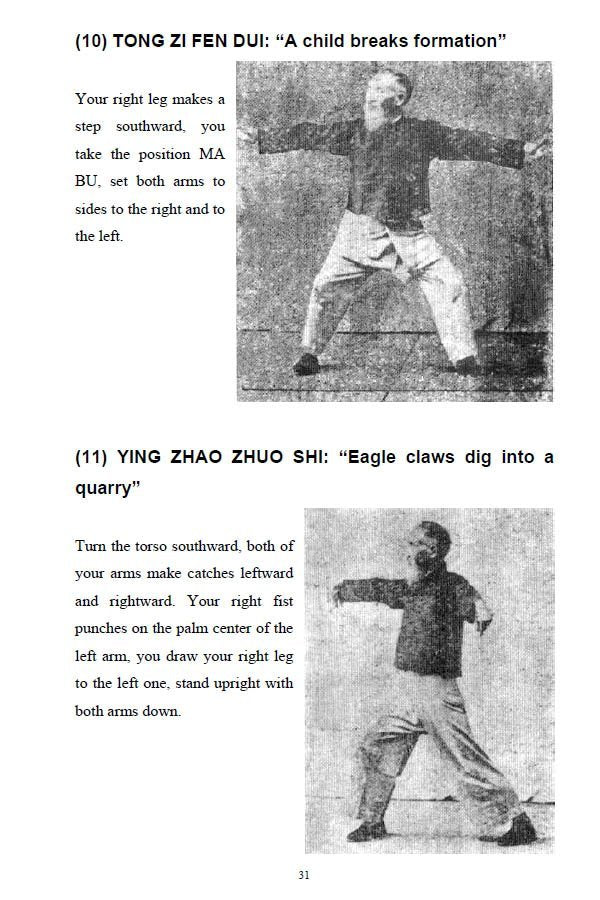

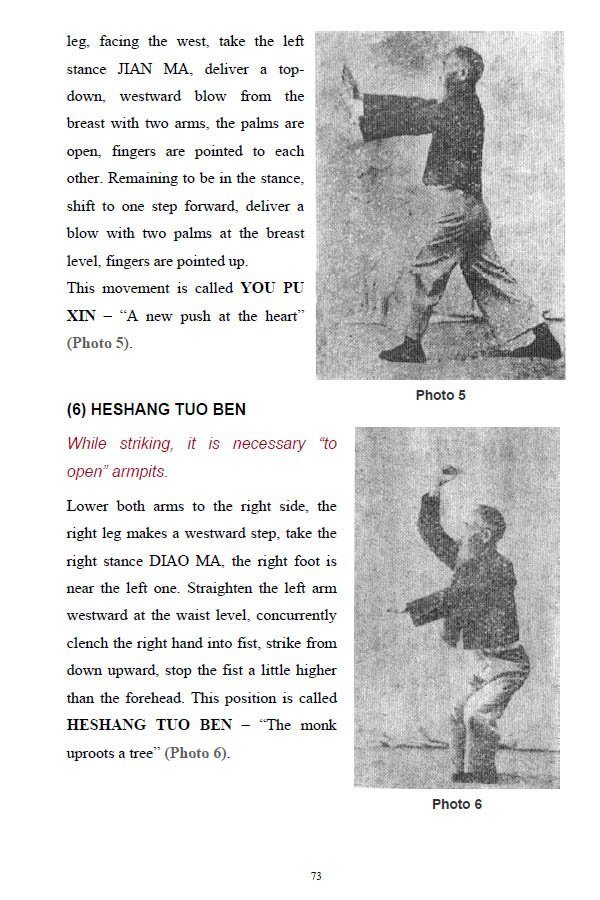
Tang Ji Ren.
TANG SHI QUAN SHU: PUGILISTIC ART OF THE TANG FAMILY. Outer Techniques of DA HONG QUAN (Hangzhou, 1933)
Payment Methods: Credit Card (Visa, Mastercard, American Express, Discover, etc.), ShopPay, PayPal, GooglePay.
We use Shopify Payments, a trustworthy payment gateway providing the best security. Shopify is certified Level 1 PCI DSS compliant. This means that we meet all six categories of PCI DSS requirements.
Shopify Payments is one of the most secure payment processors available, so you can shop with confidence.
The digital edition of the book (eBook in PDF) is an exact copy of the printed version. After you order, you will get instant access to download the eBook. You will also receive an email with a link to the download page.
TANG SHI QUAN SHU: Pugilistic Art of the Tang Family. Outer Techniques of DA HONG QUAN.
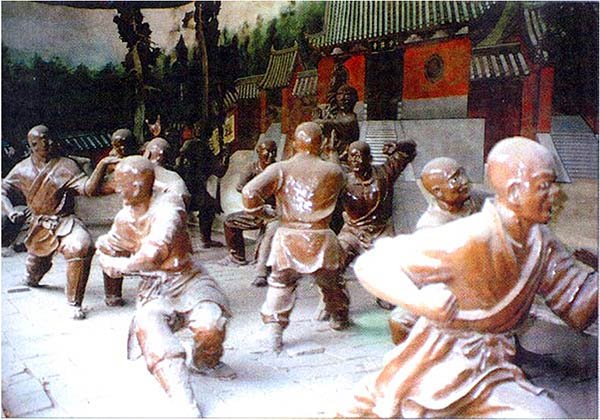
DA HONG QUAN is one of the most important parts of Shaolin Training. The picture shows the gallery of wooden sculptures at the Shaolin Monastery. Monks are in the process of improving techniques of DA HONG QUAN.
During several centuries Shaolin monks started to comprehend the Pugilistic Art through learning this traditional style. Mastery directly depends on time spent and diligence displayed for perfection certain elements, that is why any stages of learning martial art, however simple they could appear to from the first sight, should not be omitted. Chinese masters spend most of training time for improvement of movements and the base for movements is proper stances. As they say in China, Before learning to go, it is necessary to learn how to stay.
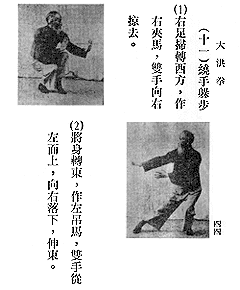
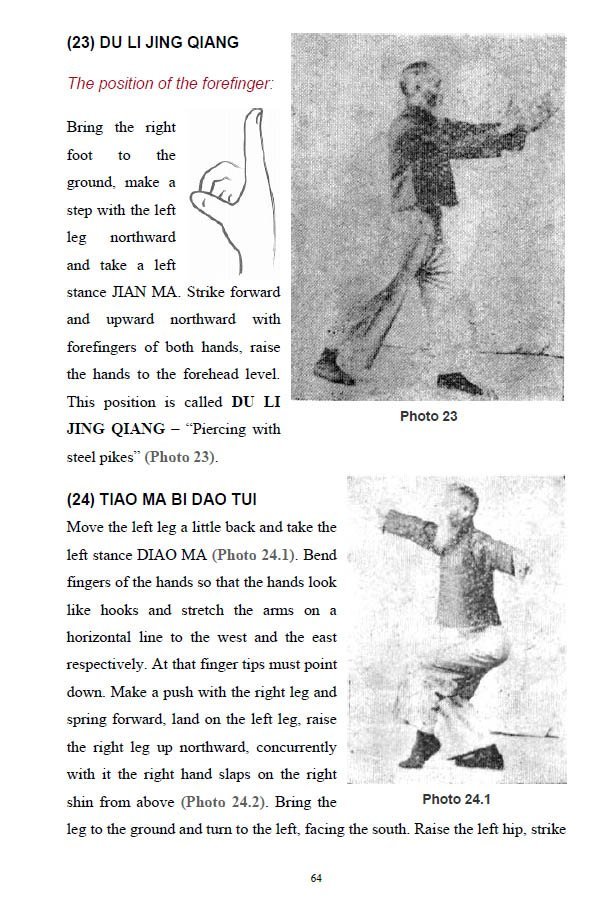
The book presents the Shaolin Pugilistic Art (SHAOLIN QUAN SHU) in the traditional manner. At first, stances and transitions from one stance to another are learned in a certain succession, which helps to acquire material more quick and effective. Then basic strikes are learned, they are also executed in a certain succession and according to a certain scheme. Repeated drills in basic skills done diligently lay the required foundation, it is impossible to reach high levels of mastery without that. Later, learning combat methods of SHAOLIN DA HONG QUAN and XIAO HONG QUAN follows...
About the Author
BOOK details
- Shaolin Kung Fu Online Library (USA, 2005)
- English
- PDF / 115 pages